
Tesla Settings You Should Change IMMEDIATELY (2026)
If you just got a Tesla or even if you've owned one for a while, there are settings in this car that are actively working against you right now. Tesla ships these cars with default settings that aren't optimized for comfort, efficiency, or even safety, and most owners never change them. I'm Mike Seuss, and today I'm walking you through Tesla settings you should change immediately in 2026, especially if you're driving a Model 3 Highland or a Model Y Juniper. Let's start with the ones that affect how the car feels the moment you start driving.
Steering Mode And Regenerative Braking
One of the first things you should change is steering mode. Tesla defaults to a setting that doesn't always feel natural for daily driving. Switching this changes how heavy or light the steering feels, especially at highway speeds. Spend a minute testing the different options and choose the one that feels stable and predictable to you. This single change makes the car feel more normal instantly.
Next is regenerative braking. This setting completely changes how the car slows down when you lift off the accelerator. If it feels too aggressive or not strong enough, you're going to hate driving the car. And a lot of people never realize this is adjustable. Dial it in early so the car feels smooth instead of jerky.
Key Takeaways
Adjust steering mode for a more natural feel.
Customize regenerative braking for smoother deceleration.
Personalize alerts to avoid annoyance and distraction.
Optimize climate control for comfort and efficiency.
Set up driver profiles for a personalized driving experience.
Safety And Speed Assist
Go into the safety menu and review your alert settings. Tesla enables a lot of warnings by default, and some of them are useful, while others can feel overly aggressive. You don't want to turn off safety systems entirely, but you do want to customize how and when you're alerted, so you're not constantly getting distracted or annoyed.
Speed assist is another setting most people never touch. You can choose how Tesla warns you about speed limits: visually, audibly, or not at all. If you drive in areas where speed limits change constantly, this can either be helpful or extremely annoying. Set it up so it actually works for you instead of fighting you every drive.
Climate Control And Comfort Settings
Tesla's climate system is powerful, but the default behavior isn't always ideal. Go into the climate settings and adjust how aggressively the system responds. Some people prefer a quieter, slower response, while others want instant cooling or heating. Changing this makes a huge difference in cabin comfort and noise.
Cabin overheat protection is enabled by default, but it's not always set the way you want. If you live in a hot climate, you should choose how it behaves, whether it uses just the fan or the air conditioning or turns off entirely. This affects battery usage more than most people realize.
If your Tesla has heated or ventilated seats, go into the settings and customize how they behave. Some people want them turning on automatically, others don't. There's no right answer, but leaving the default can lead to unnecessary battery use or discomfort.
Same idea here. If your steering wheel has heating, decide whether you want it automatic or manual. This is a small setting, but it makes winter driving much more comfortable when it's set correctly.
Display And Interface Customization
Tesla's screen brightness settings are often overlooked. Go into display settings and adjust how the screen responds to lighting conditions. Some owners find the default too bright at night or too dim during the day. Fixing this early reduces eye strain and makes nighttime driving much better.
If your Tesla supports automatic light and dark mode switching, turn it on. This makes the interface easier to read and reduces glare, especially during night drives. Once you turn this on, you'll immediately notice less eye strain at night and a much cleaner looking interface overall.
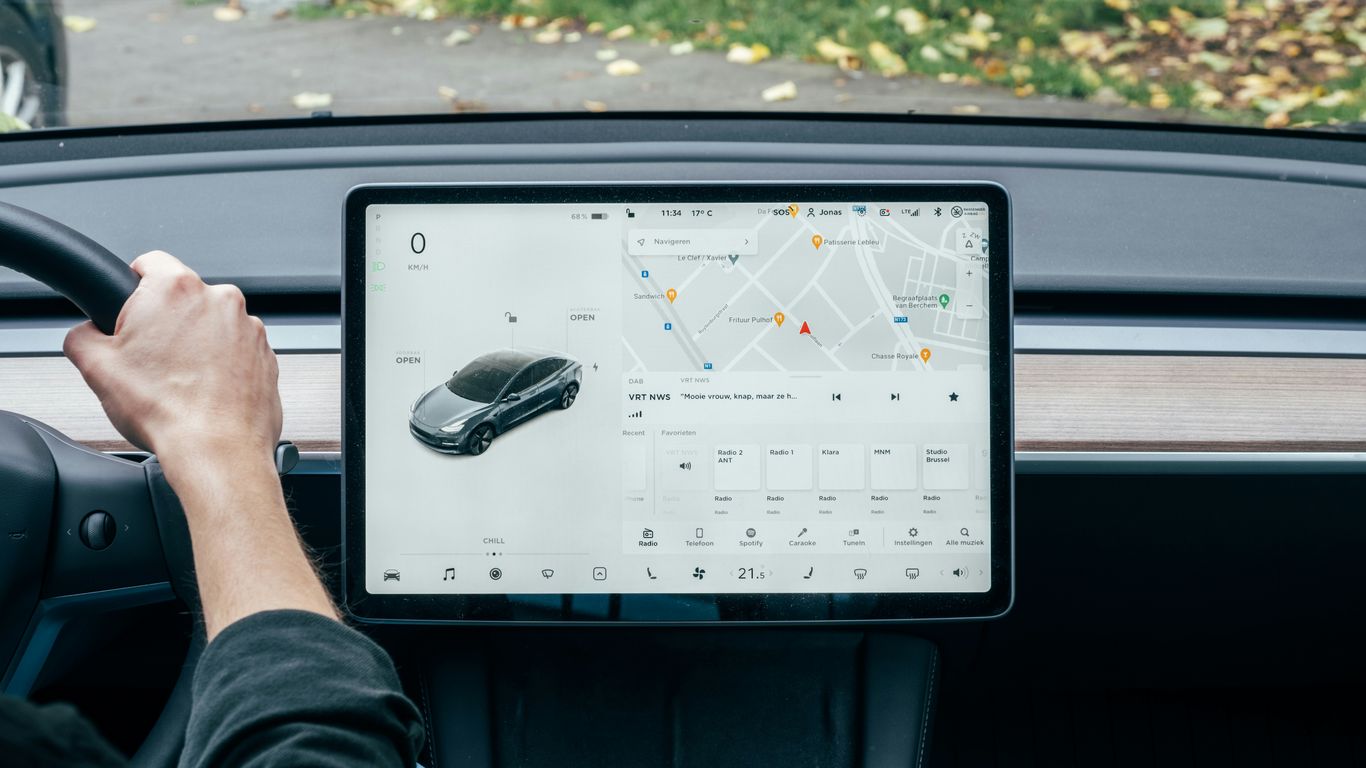
Tesla lets you customize what appears in your quick access area, but most people never touch it. Put the controls you actually use there instead of digging through menus every day. This small change saves you time every single drive because you stop hunting through menus for things you use constantly.
Driver Profiles And Phone Key
Set up your driver profile properly. This isn't just seat position. It controls mirrors, steering wheel position, climate preferences, and more. When profiles are set up correctly, the car feels like it was built specifically for whoever is driving it.
Go into your phone key settings and confirm walk-away locking works consistently. Test it multiple times. If it's unreliable, adjust how your phone connects or where it's stored in the car. Fixing this early prevents those frustrating moments where the car doesn't unlock when you expect it to.
Mirror Settings And Charging Habits
Autofolding mirrors are useful in tight spaces, and mirror tilt and reverse can help with parking, but not everyone likes it. Set it once and forget about it. Once it's dialed in, you never have to think about your mirrors again.
Tesla defaults don't always align with best daily use. Set your daily charge limit intentionally, usually around 80% for most drivers, and don't rely on guesswork. This one setting alone can make a big difference in long-term battery health.
If your Tesla supports it, enable location-based charge limits. This allows the car to behave differently at home versus road trips, and it's one of the best newer charging features Tesla has added. After setting this up once, charging becomes something you barely think about anymore.
Set up scheduled charging or scheduled departure if you charge at home. This can save money if you're on time-of-use electricity plans and ensures the battery is ready when you leave. If you charge at home regularly, this is one of the easiest ways to save money without changing your routine.
Sentry Mode, Dashcam, And Updates
Let's finish this up. Go into Sentry Mode and decide where you actually want it active. Leaving it on everywhere drains battery faster than most people expect. Being intentional with Sentry Mode helps balance security without unnecessary battery drain.
Make sure dashcam is enabled and recording properly. This protects you from day one, and it's shocking how many owners never verify this. It only takes a few seconds to check, and it can save you a massive headache later.
Tesla sends a lot of notifications by default. Go through them and turn off the ones you don't need. This keeps important alerts from getting lost. Cleaning this up makes sure you actually notice alerts that matter.
Finally, go into the software menu and set updates to 'Advance'. This ensures you get new features sooner instead of months later. This simple change keeps your Tesla feeling new long after you've taken delivery.
Those are the Tesla settings you should change immediately in 2026. If you adjust even half of these, your Tesla will feel smoother, quieter, more comfortable, and easier to live with every single day.


Comments